| Type |
SWL |
Hoist Hook path |
Hoist Lifting speed V(m/min) |
Group of mechanisms |
SWL |
Hoist Hook path |
Lifting speed V(m/min) |
| [t] |
[m] |
Double speed |
frequency conversion |
[FEM/ISO] |
[t] |
[m] |
Double speed |
frequency conversion |
| DR-Bas3 |
1,6 |
12;18;24;30;36 |
10/1.6 |
1.6 - 10 |
2m/M5** |
3.2 |
6;9;12;15;18 |
5/0.8 |
0.8 - 5 |
| 1,25 |
3m/M6** |
2,5 |
| 1 |
4m/M7** |
2 |
| DR-Bas5 |
3.2 |
12;18;24;30;36 |
10/1.6 |
1.6 - 10 |
2m/M5** |
6,3 |
6;9;12;15;18 |
5/0.8 |
0.8 - 5 |
| 2,5 |
11/1.8 |
1.8 - 11 |
2m/M5** |
5 |
5.6/0.9 |
0.9 - 5.6 |
| 2 |
3m/M6** |
4 |
| 1,6 |
4m/M7** |
3,2 |
| 3,2 |
12;18;24;30;36 |
10/1.6 |
1.6 - 10 |
2m/M5** |
|
|
|
|
| 2,5 |
11/1.8 |
1.8 - 11 |
2m/M5** |
|
|
|
|
| 2 |
3m/M6** |
|
|
|
|
| 1,6 |
4m/M7** |
|
|
|
|
| DR-Bas10 |
6,3 |
12;18;24;30;36 |
10/1.6 |
1.6 - 10 |
1m/M4** |
12.5 |
6;9;12;15;18 |
5/0.8 |
0.8 - 5 |
| 6,3 |
8/1.32 |
1.32 - 8 |
2m/M5** |
12.5 |
4/0.66 |
0.66 - 4 |
| 5 |
10/1.6 |
1.6 - 10 |
2m/M5** |
10 |
5/0.8 |
0.8 - 5 |
| 4 |
3m/M6** |
8 |
| 3,2 |
4m/M7** |
6.3 |
| 6,3 |
6;9;12;15;18 |
10/1.6 |
1.6 - 10 |
1m/M4** |
|
|
|
|
| 6,3 |
8/1.32 |
1.32 - 8 |
2m/M5** |
|
|
|
|
| 5 |
10/1.6 |
1.6 - 10 |
2m/M5** |
|
|
|
|
| 4 |
3m/M6** |
|
|
|
|
| 3,2 |
4m/M7** |
|
|
|
|
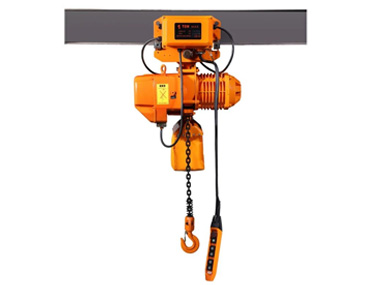
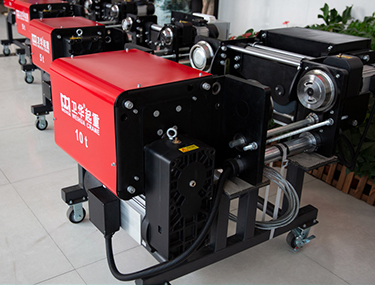
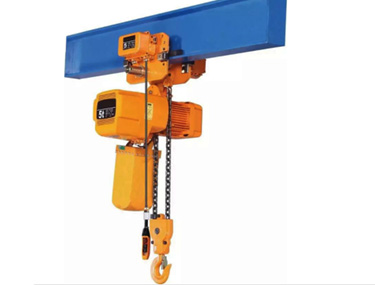
Key parameters to consider when selecting a single-girder electric hoist:
1. Lifting capacity: The maximum weight the electric hoist must lift, commonly 1 ton, 2 tons, 3 tons, 5 tons, 6 tons, or 10 tons.
2. Electric hoist span: The horizontal distance between the wheels at both ends of the crane's main beam, depending on your factory dimensions.
3. Lifting height: The distance from the lowest point to the highest point of the hook.
4. Working class: Selected based on usage frequency and load rate (A1-A7).
5. Travel length: The length of the track, determining the crane's coverage area.
6. Power supply: Generally three-phase 380V/50Hz.
7. Environment: Indoor or outdoor? Are there any special environmental requirements (e.g., high temperature, dust, explosion-proof requirements)? This determines whether special protection (e.g., IP rating, insulation, explosion-proof) is needed.