| Parameter Category |
Parameter Range |
Description |
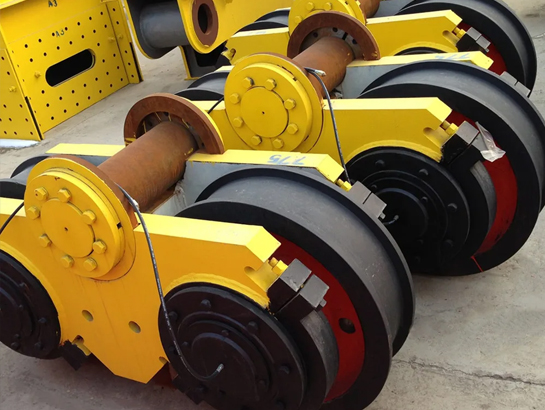
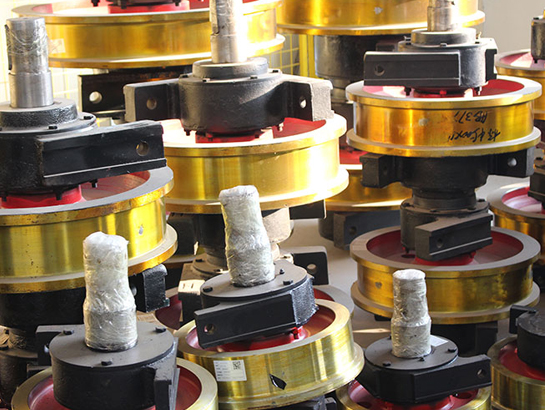
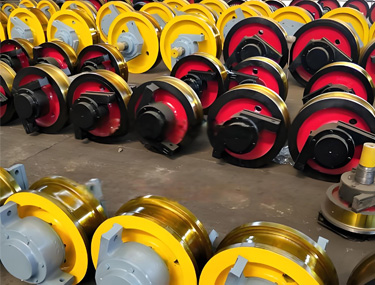
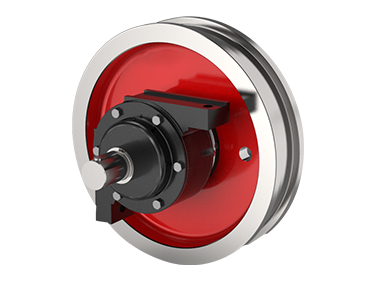
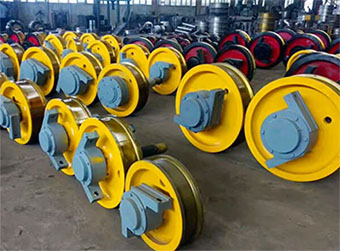
| Wheel diameter (D) |
Φ160mm ~ Φ1000mm |
Common specifications: Φ250mm, Φ400mm, Φ630mm, Φ800mm |
| Tread width (B) |
80mm ~ 200mm |
Must match the rail head width (e.g., QU80 track corresponds to a wheel width of approximately 100mm). |
| Rim height (h) |
20mm ~ 50mm |
Double flange (universal), single flange (low lateral force), flangeless (requires guides). |
| Material |
Cast steel (ZG340-640), forged steel 42CrMo、65Mn |
Cast steel is economical and durable, while alloy steel offers high load-bearing properties. |
| Heat treatment hardness |
Wheel surface hardness: HB300~380 or HRC45~55 |
Surface hardening improves wear resistance. |
| Single wheel load rating |
5t ~ 500t |
Allocation depends on the total crane weight and number of wheels (e.g., a four-wheel crane with a total load of 100t has a single wheel load of approximately 25t). |
| Maximum wheel pressure (P) |
50kN ~ 800kN |
Must match the track's load-bearing capacity (e.g., QU100 track allows for a wheel load of approximately 300kN). |
How to Choose a Suitable Crane Wheel Supplier
Before searching for a supplier, you must define your requirements as clearly as possible:
Precise Crane Wheel Parameters:
Crane Information: Model, Manufacturer, Tonnage, Working Class (A3-A8).
Crane Wheel Drawings/Part Numbers: Ideally, provide the original manufacturer's part number directly.
Key Dimensions: Crane wheel diameter, road width, flange height, axle hole size and tolerances, tread shape (cylindrical/conical/drum-shaped).
Technical Requirements: Material (e.g., ZG340-640, 42CrMo), tread hardness (HRC value), heat treatment requirements.
Operating Condition Information:
Wheel Pressure: Maximum static and dynamic wheel pressure (consult the equipment manufacturer or technical department).
Rail Type: QU80, P43, etc.
Environment: Indoor/Outdoor, Temperature, Humidity, Corrosion, Dust.
Past Issues: Have there been any abnormal wear, rail wear, or peeling issues in the past? This helps the supplier provide targeted recommendations. Step Two: Assessing the Crane Wheel Supplier's Qualifications and Capabilities
Specialty Area and Experience:
Does the supplier specialize in crane components? There is a fundamental difference between a general machining plant and a specialized crane parts manufacturer.
Do they have successful application cases for similar products in the same industry (e.g., steel, ports, logistics)? Request reference cases or customer testimonials.
Years of Experience: Experienced manufacturers have a better understanding of various failure modes and technical details.
Technical Capabilities and Support:
Technical Communication: Can the supplier's technical personnel understand your needs and ask professional questions or offer suggestions? (For example, they will inquire about wheel pressure, working class, not just dimensions).
Design Capabilities: If the original drawings are missing, can they perform surveying and reverse design based on your parameters? Can they provide design calculations?
Solution Capabilities: When complex problems such as rail wear occur, can they provide a systematic solution from wheels and rails to installation and adjustment, rather than just selling a single part?
Production and Quality Assurance System:
Production Process: Understand the source of the raw materials (in-house casting/outsourcing? forging or casting?), heat treatment equipment (does the company have professional medium-frequency quenching machines?), and machining accuracy (CNC equipment status).
Testing Capabilities: Does the company have the necessary testing equipment? (e.g., hardness tester, ultrasonic/magnetic particle flaw detector, coordinate measuring machine). Can the company provide material reports, heat treatment reports, and flaw detection reports?
Certifications and Standards: Does the company comply with relevant national/industry standards or international standards (e.g., FEM, DIN)? Has the company obtained ISO 9001 or other quality management system certifications?