Selecting a matching
hook for a bridge crane is a crucial safety task and should never be chosen arbitrarily. Below are detailed selection steps and key considerations that you must follow.
Core Principle: Safety First, Compliance Matching
The hook must be perfectly matched to the bridge crane's rated lifting capacity, working class, and operating environment. An incompatible bridge crane hook is a serious safety hazard and can lead to catastrophic accidents such as breakage or cargo falling.
Systematic Steps for Selecting a Matching Bridge Crane Hook
Step 1: Determine Basic Technical Parameters (Crucial!)
Before purchasing, you must confirm the following information from the following sources:
Crane's Rated Lifting Capacity (tons): This is the most important parameter. The rated lifting capacity of the
bridge crane hook must be greater than or equal to the crane's rated lifting capacity. For example, for a 32-ton crane, the hook's rated load must be at least 32 tons.
Crane's Working Class (M1~M8): This reflects the frequency of the crane's use and load conditions. This determines the required safety factor and toughness of the bridge crane hook. Frequent, heavy-duty operations (e.g., A5-A7 class) require higher-grade hooks.
Existing Crane Hook Model or Specifications: If replacing, check the nameplate or stamped markings on the old crane hook. These markings typically include: rated lifting capacity, material, production standard, manufacturer, etc. This is the most accurate matching basis.
Connection Method and Dimensions:
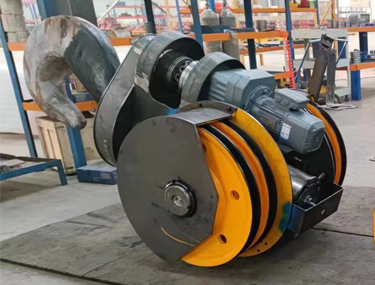
Pulley Block Connection Method: Is the bridge crane hook and pulley block connected by threads (nut fixing) or by bearings/thrust bearings (hook beam assembly)? They must be consistent.
Key Dimensions: Crane hook opening (S), throat width (L), hook shank diameter (d), etc. The new hook must be able to be easily installed into the existing pulley block or beam.
Step 2: Selecting the Correct Crane Hook Type
Single Hook vs. Double Hook:
Single Hook: Simple structure, easy to attach and detach. Suitable for applications with smaller lifting capacities (usually ≤80 tons), and is the most common type.
Double Hook: Symmetrical force distribution, more even weight distribution, and fuller utilization of hook material. Suitable for heavy lifting capacities (typically >80 tons) or applications requiring high stability.
Forged Hooks vs. Plate Hooks:
Forged Hooks (Mainstream Choice): Forged as a single piece, high strength, and most widely used. Suitable for most general applications.
Plate Hooks: Constructed from multiple cut steel plates riveted together. Advantages include higher safety; a crack in one plate will not immediately cause the entire hook to break, facilitating inspection. Commonly used for high tonnage, heavy loads, high-level work (such as metallurgy, casting), or extremely critical applications.
Step 3: Verification of Certification and Compliance
Mandatory Certification: In China, crane hooks are classified as special equipment components. Products must be purchased from manufacturers with a Special Equipment Manufacturing License (TS certification). This is the minimum guarantee of legality and safety.
Standard Compliance: Products should comply with national or international standards.
Clear Marking: Qualified hooks must have permanent steel stamp markings on the hook body, including at least:
Rated Lifting Capacity
Manufacturer's Name or Logo
Production Number
Material Grade
Production Date
Step Four: Evaluating Suppliers and After-Sales Service
Choose a Professional Manufacturer: Prioritize reputable manufacturers in the lifting industry, such as Weihua Group, a leading Chinese manufacturer of cranes and accessories.
Provide Technical Support: Reliable suppliers will help you confirm the model based on the parameters you provide and provide technical drawings for verification.
After-Sales Service: Find out if they provide product quality certificates, test reports, and other documents.