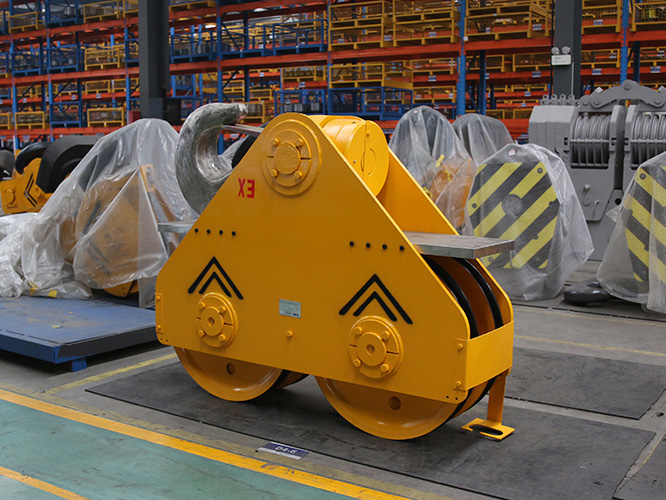
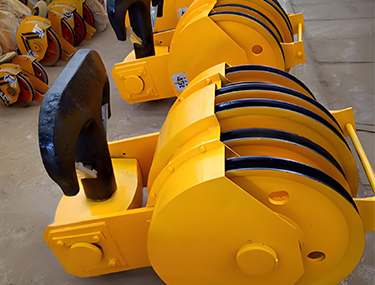
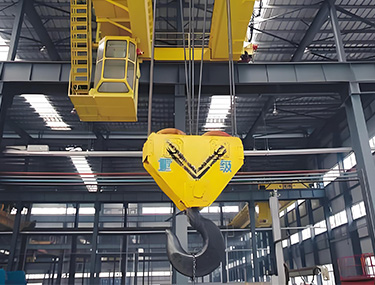
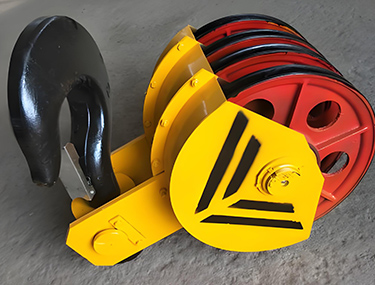
1. Crane Hook Materials
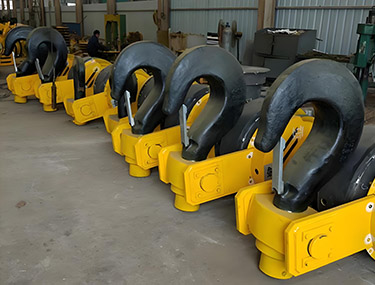
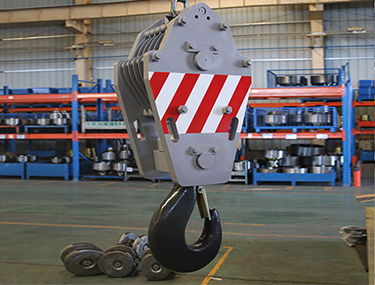
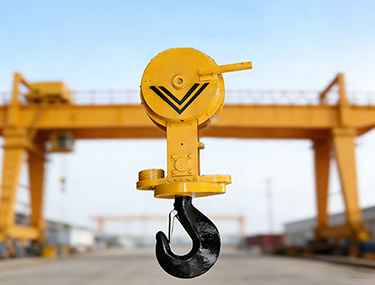
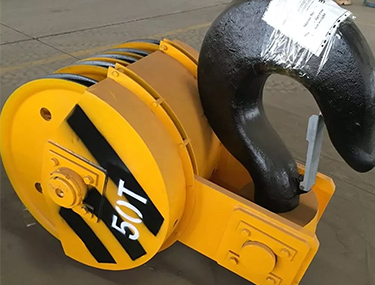
100-ton crane hooks used in bridge cranes and gantry cranes must be made of high-strength alloy forged steel.
Common grades: DG20Mn, DG34CrMo, DG34Cr2Ni2Mo, etc. ("DG" represents "hook steel"). 100-ton crane hooks require extremely high toughness (impact resistance) and strength.
2. 100-Ton Crane Hook Manufacturing Process
Core Process: Free Forging + Die Forging: Forging is performed using a large-tonnage press to refine the grain size, eliminate internal defects, and form fibrous flow lines, ensuring the metal flow direction aligns with the hook body shape, greatly improving load-bearing capacity and fatigue life.
Heat Treatment: Quenching and tempering are essential to obtain the optimal combination of strength and toughness (comprehensive mechanical properties).
Machining: Precision turning of threads and mating surfaces.
Surface Treatment: The hook body surface is typically shot-peened to eliminate microcracks and form a beneficial compressive stress layer, improving fatigue strength.
3. Safety Devices
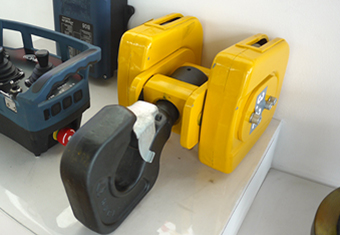
Mandatory Safety Tongue: This is an absolutely essential device. It is a spring-loaded or counterweighted baffle that can be manually pushed open to engage the sling, and automatically closes upon release, locking the sling to prevent it from slipping out of the hook.
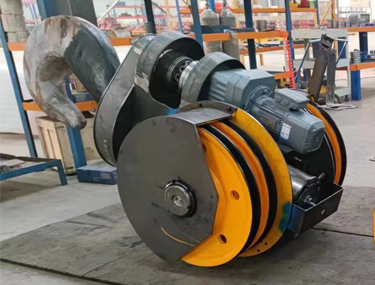
Crane Hook Nut and Thrust Bearing: The nut is equipped with an anti-loosening device. A large thrust self-aligning roller bearing is installed below it, allowing the 100-ton hook to rotate easily and smoothly under load, preventing wire rope kinking.